THE BRIEF:
Create a promotional campaign for WWF to raise awareness of the link between unsustainable palm oil production and declining orangutan numbers.
THE THINKING:
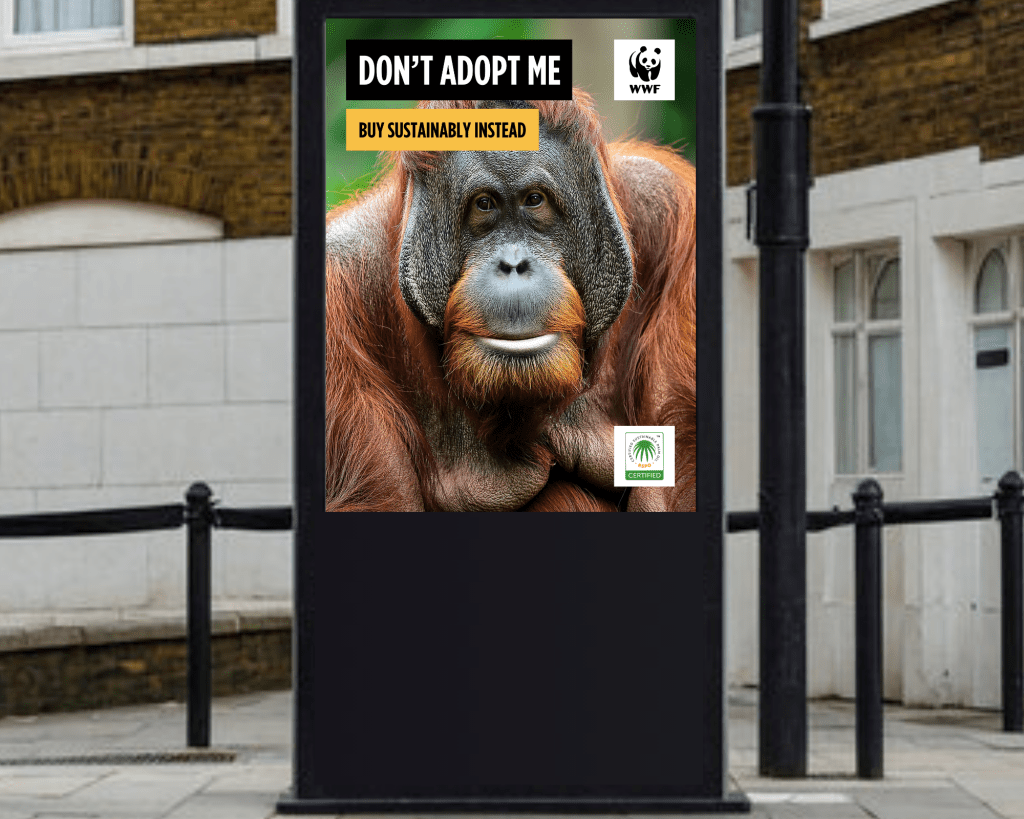
People are bored of generic ‘Adopt an Animal’ charity campaigns. I needed to subvert this, whilst still creating a message that resonates with audiences.
THE IDEA:
Subvert charity tropes and highlight the presence of unsustainable palm oil in everyday products. This led me to create the taglines ‘Don’t Adopt Me’, ‘‘Wouldn’t You Just Kill For Smoother Hair?’, and hashtag #TogetherWeCreateChange.
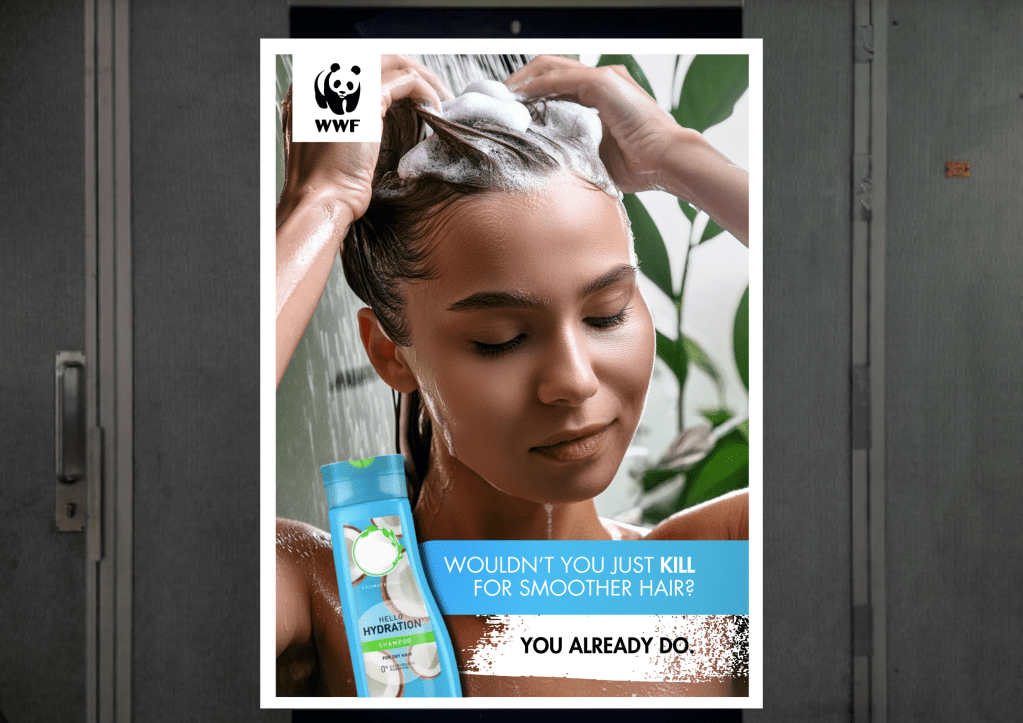

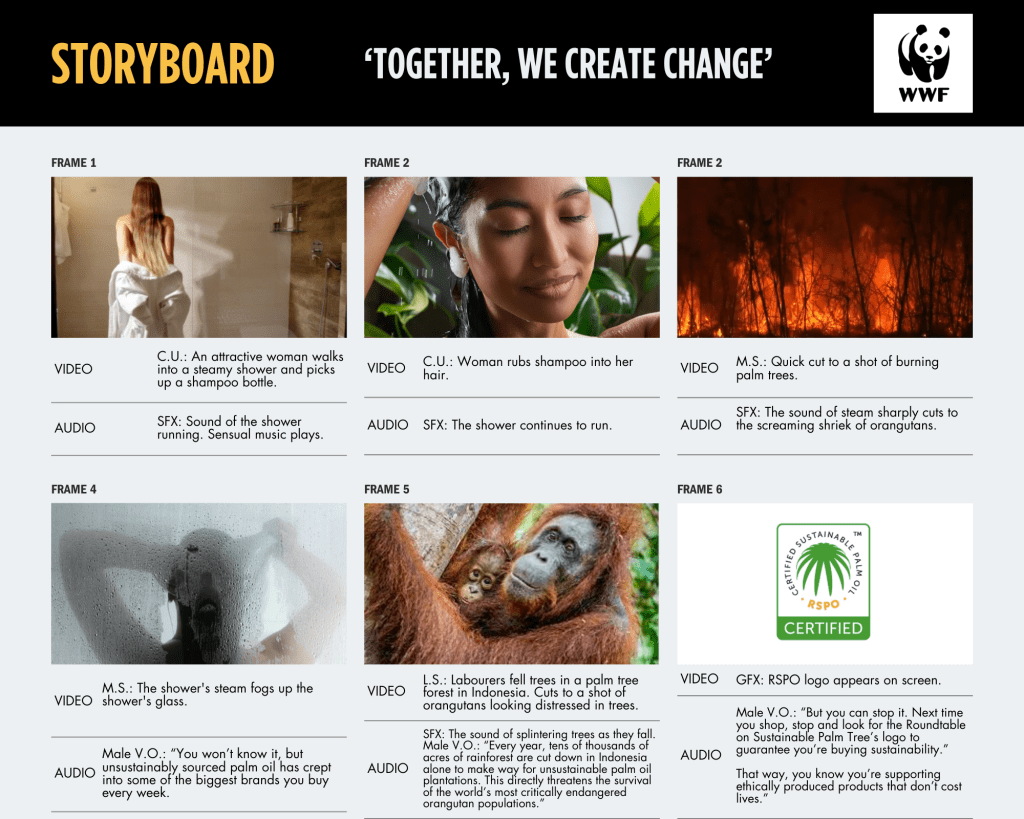
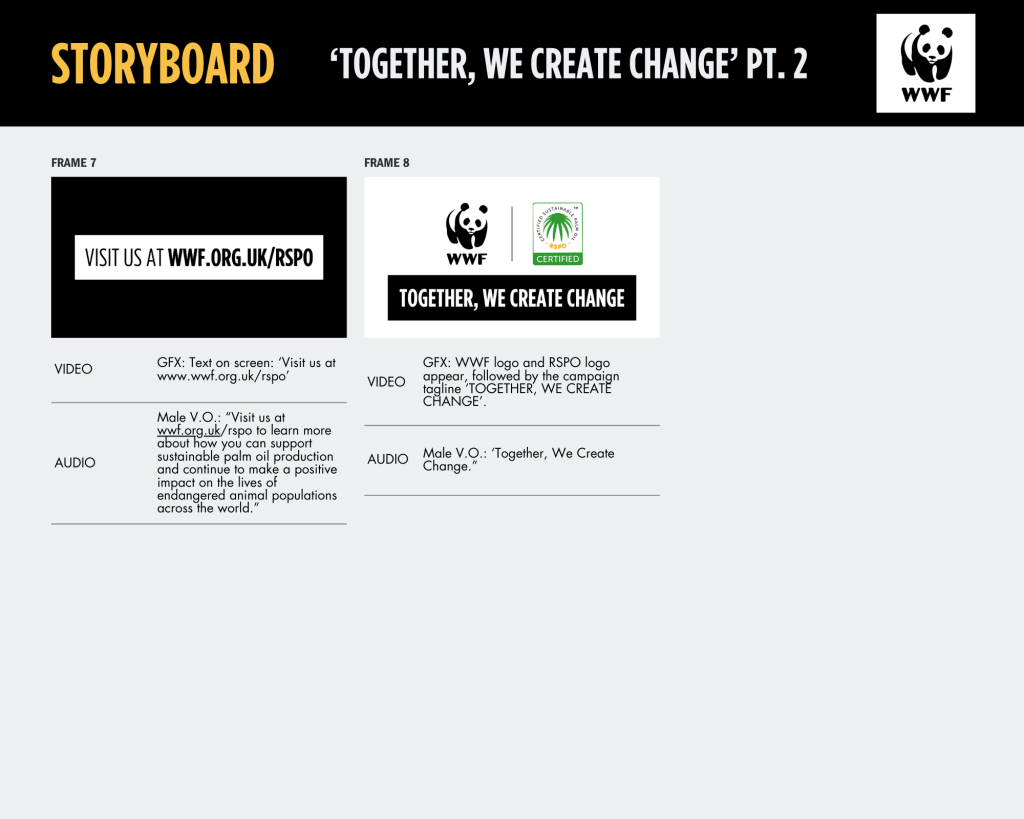
ONLINE / TV ADVERT 60”
SOCIAL MEDIA POSTS | INSTAGRAM





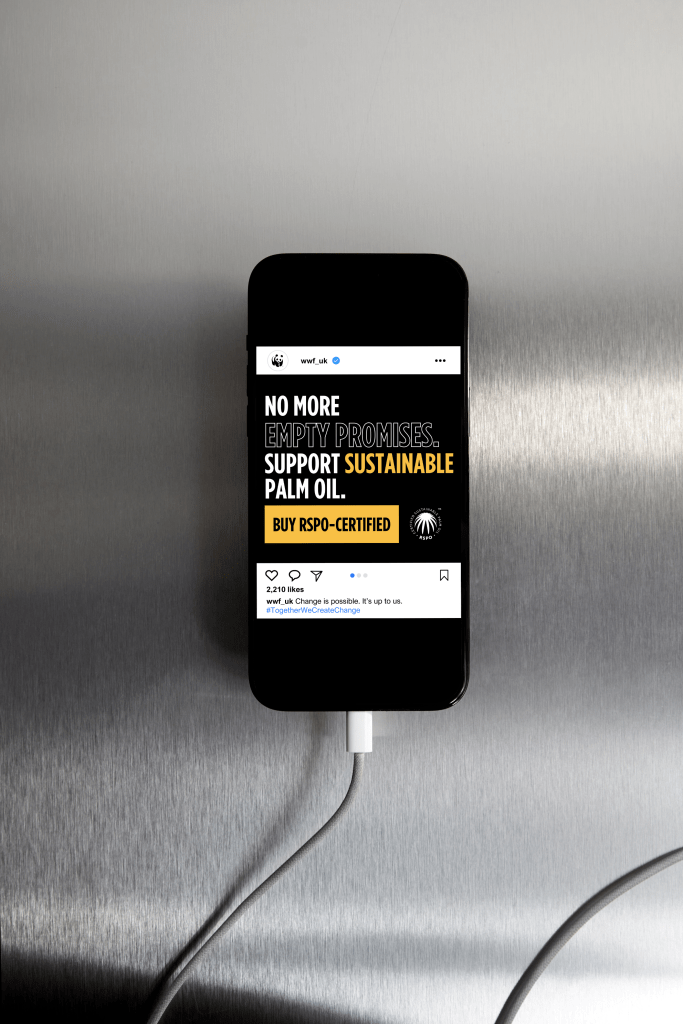
SOCIAL MEDIA ADVERT | CTA BLOG POST

CONTENT MARKETING COLLATERAL | BLOG POST
SAVING ORANGUTANS: CREATING SUSTAINABLE CHANGE WITH THE HELP OF RSPO

A century ago, the number of wild orangutans totalled well over 230,000.
Today, that number sits at just 50,000.
Having once roamed as far as southern China and the Southeast Indonesian island of Java, orangutans now only reside in two places – Sumatra and Borneo.
Classified as ‘endangered’ and ‘critically endangered’, respectively, orangutans are being pushed to the very brink of extinction.
Why?
Unsustainable palm oil production.
The creation of illegal palm oil plantations has a destructive impact on orangutans’ habitat, making them vulnerable to starvation and the threat of poachers in local areas.
Despite sharing an astonishing 96.4% of our genetics with the great ape, not enough is being done to protect them.
However, the Roundtable on Sustainable Palm Oil (RSPO) is working to create a brighter future for orangutans – but they need your help.
This blog provides a comprehensive insight into why unsustainable palm oil threatens orangutans and the environment as well as the ways you can support RSPO in creating a sustainable future for orangutans today.
Why is Unsustainable Palm Oil A Problem?
Palm oil is one of the most efficient and low-cost vegetable oils that can be produced. It’s everywhere – in your snacks, your cleaning products, and even in your cosmetics. It’s estimated that palm oil is present in over 50% of our supermarket products.
Why is this a problem?
To produce palm oil, huge areas of land need to be cleared for plantations. In the last two decades alone, Indonesia lost just shy of 25 million hectares of forestry to palm oil plantations – an area larger than the size of Ireland.
However, if produced on a smaller scale (typically 50 hectares or less), palm oil can be ethical and sustainable. It can also be a genuine force for good, acting as an economic lifeline for communities across the world.
Unfortunately, this is not the case in most areas of the world, meaning unsustainably produced palm oil creeps into the products you consume every day.
For orangutans, this comes at a deadly cost.
What are the Consequences of Unsustainable Palm Oil for Orangutans?

When unsustainable plantations are created, thousands of acres are deforested, destroying the homes and food sources for orangutans in the region.
This means orangutans either starve or are killed by poachers as they wander into dangerous areas seeking food and water.
However, the impact of deforestation runs far deeper than declining orangutan numbers.
What are the Environmental Consequences of Unsustainable Palm Oil Production?
Unsustainable palm oil plantations are ecologically disastrous.
Here are four main environmental impacts of deforestation for unsustainable palm oil plantations:
- Air Pollution: A widely used method for clearing vegetation for palm oil plantations is burning. Burning forests releases huge volumes of smoke and CO2 into the atmosphere, polluting the air and contributing to climate change.
- Soil & Water Pollution: Palm oil mills produce over 2 metric tonnes of effluent discharge (wastewater) for every tonne of palm oil they produce. If untreated, this water can directly cause freshwater pollution and soil contamination.
- Soil Erosion: Illegally created plantations often lack the correct planning and insight when creating plantations. As a result, many are planted on steep slopes, resulting in significant soil erosion. This increases the risk of flooding due to weak soils, leaving the rest of the landscape more vulnerable to further degradation.
- Climate Change: Tropical forests are the world’s largest ‘carbon sinks’. In fact, they store more carbon than any other ecosystem. This means that once converted into illegal plantations, huge quantities of carbon are released into the atmosphere, intensifying the impact of climate change.
The ecological consequences of unsustainable palm oil production can’t be underestimated.
What Brands Support Unsustainable Palm Oil?
Knowingly or otherwise, palm oil produced by illegal plantations has been traced to the products of some of the largest global brands in the world.
As uncovered by the Rainforest Action Network (RAN), companies have included Procter & Gamble (P&G), Nestlé, PepsiCo and Unilever.
Since then, however, both Nestle and Unilever have committed to transitioning towards using more sustainable alternatives.
Whilst change is possible, huge work and resources are required to make a meaningful difference.
However, there is a solution.
The Round Table on Sustainable Palm Oil (RSPO)

Founded in 2004, the Roundtable on Sustainable Palm Oil (RSPO) was set up to make palm oil production sustainable.
The RSPO aims to certify businesses and small-holders that grow palm oil in an area that is 50 hectares or less. This helps produce palm oil in a way that doesn’t harm people, endanger orangutans, or damage the wider environment.
How Does the Roundtable on Sustainable Palm Oil (RSPO) Help Protect the Environment & Orangutans?

The RSPO is committed to long-term positive change.
Here are five ways RSPO helps promote sustainable palm oil production and protects endangered orangutan populations.
- Certified Plantations & Standards: RSPO enforces strict regulations to ensure companies remain responsible socially, economically, and environmentally.
- Traceability: RSPO-members are required to trace the origin of their palm oil all the way along the supply chain, keeping them accountable.
- Environmental Best Practices: Zero-burning policies and peatland conservation are just two agricultural standards that are upheld by members to reduce the effects of soil and air pollution and their wider impact on global warming.
- Habitat Protection & Reforestation Projects: Rigid deforestation bans in areas of orangutan habitats are put in place by RSPO. The company has also created wildlife corridors, biodiversity conservation plans, and reforestation schemes.
- Community Engagement: Change comes culturally. RSPO is hands-on when working with local communities to raise awareness of the impacts of unsustainable palm oil production on the environment and orangutan populations. This lays the seeds for future success.
RSPO is driven to create positive future change, environmentally and culturally.
To succeed, they need your support.
How You Can Help Support Sustainable Palm Oil Production
Boycotting palm oil entirely is not the answer.
Supporting sustainable palm oil is.
Here are three easy ways you can support sustainable palm oil production:
- Choose RSPO-Certified Products: Next time you shop, stop and look for the RSPO palm tree logo and buy sustainably sourced palm oil. Brands like Ben & Jerry’s, Kelloggs, and Mars have already joined RSPO’s initiative. You can also check out a range of RSPO-certified products here.
- Advocate for Change: Keep an eye out for WWF’s social media and spread awareness by sharing content with the hashtag #TogetherWeCreateChange.
- Support Sustainable Brands: You can use apps like our Palm Oil Buyer Scorecard to rate the sustainability of a brand, helping you support brands that are helping create change.
Together, We Create Change

Dwindling orangutan numbers worldwide are a wake-up call for all of us.
However, RSPO offers a hopeful and sustainable way forward, one where people and nature can both thrive. Supporting their mission and shifting towards sustainable practices is vital to saving orangutans and contributing to a healthier global economy.
To raise further awareness, download our guide, “Sustainable Shopping: Creating Sustainable Change with the Help of RSPO” and join the growing community of people and activists making their mark today.
Remember – together, we create change.
 Oliver Clark | Copywriter